

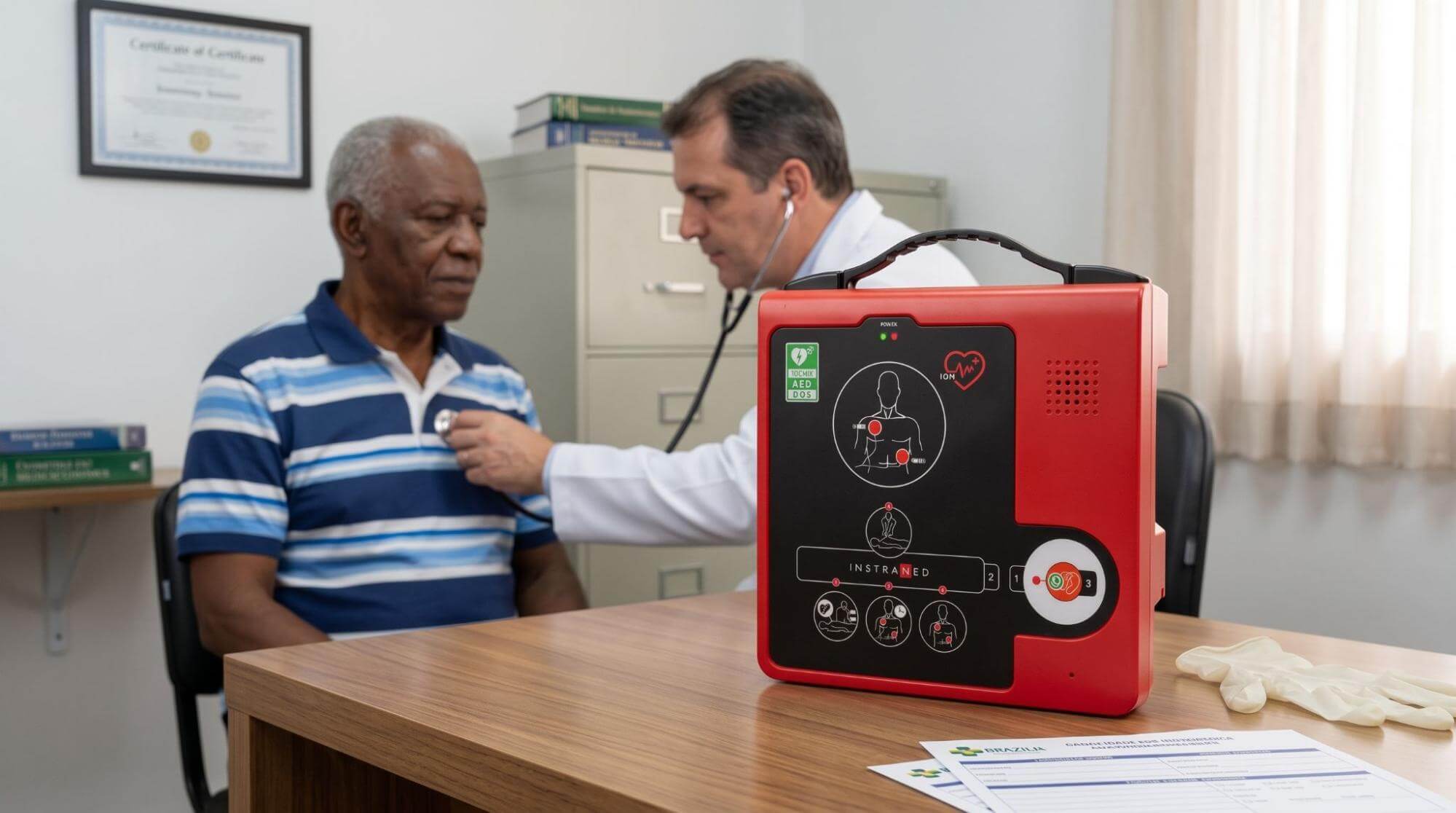
Talking about the heart also means understanding how technology has expanded our ability to observe its signals, identify changes, and support healthcare professionals at different stages of care.
With every heartbeat, the heart generates signals that can provide relevant information about how it functions. For a long time, much of this data could only be observed at specific moments, such as during a medical appointment, an electrocardiogram, or in an emergency situation.
Advances in medical technology are expanding this capacity for observation. Today, emergency equipment can bring together different monitoring parameters; portable devices can track the heart’s electrical activity over extended periods; and software solutions help healthcare professionals organize and interpret increasingly large volumes of data.
This evolution expands the possibilities for cardiovascular follow-up and helps bring clinical information closer to the moment when it is needed.
From a single test to a broader view of the heart
The electrocardiogram, known as an ECG, remains one of the main tools in cardiology. The test records the heart’s electrical activity and assists in the investigation of changes such as arrhythmias, findings suggestive of ischemia or infarction, cardiomyopathies, and other cardiovascular conditions.
However, the heart has an important characteristic: some changes do not occur all the time.
An arrhythmia may arise during an everyday activity and disappear before a medical appointment. Symptoms such as palpitations, dizziness, or the sensation of irregular heartbeats may also occur intermittently.
It was precisely this need to observe the heart over longer periods that led to the development of different forms of cardiovascular monitoring.
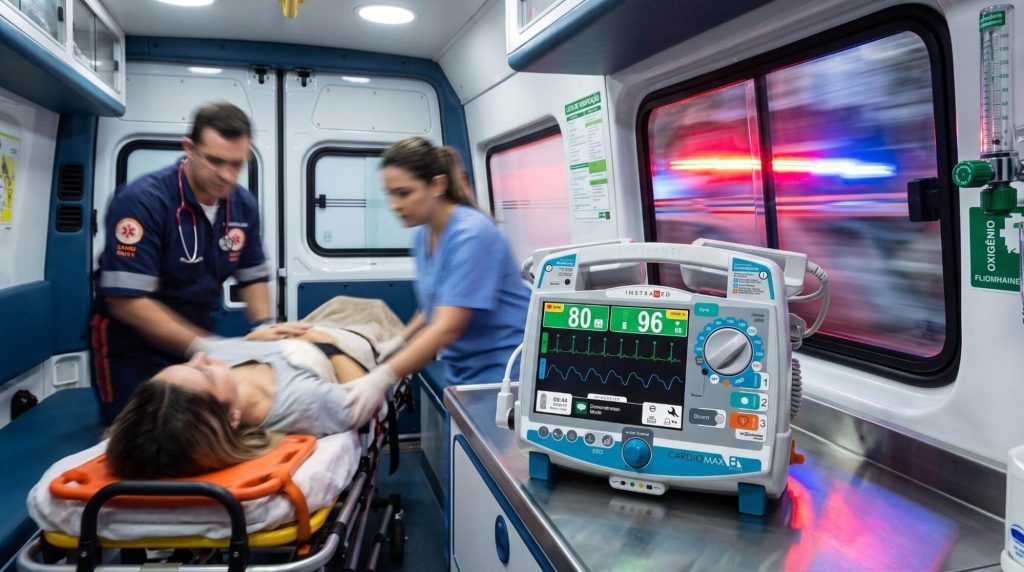
In emergencies, technology also means rapid access to information
In critical situations, the healthcare team needs to assess the patient while decisions must be made in a short amount of time.
For this reason, equipment used in urgent and emergency care has increasingly integrated resources that support different stages of treatment.
A monitor/cardioverter/defibrillator, for example, can combine ECG monitoring and, depending on its configuration, parameters such as non-invasive blood pressure, oxygen saturation, and capnography. Solutions such as Instramed’s CardioMax integrate monitoring and therapy functions in a single device, allowing different types of information to be available during patient care.
In Automated External Defibrillators (AEDs), technology has a different role. The device analyzes the heart rhythm and identifies when a shock is indicated, guiding the user throughout the stages of care.
This is an important application of automation in a setting where recognizing the rhythm and initiating a response quickly can be decisive.
When a single test is not enough: the role of prolonged monitoring
While an ECG provides a reading of cardiac electrical activity at a specific moment, ambulatory monitoring makes it possible to follow that activity during the patient’s daily routine.
Holter monitoring continuously records electrocardiographic signals, traditionally for 24 or 48 hours. Depending on the solution used, this period may be extended, allowing the professional to observe how the heart behaves throughout the patient’s routine.
This type of monitoring can be especially relevant when investigating events that occur intermittently.
During the examination, the patient goes about their usual activities while the device records cardiac activity. The data can later be analyzed and correlated with symptoms or events reported during the monitoring period.
In practice, monitoring expands the amount of information available to support medical evaluation.
Software has also become part of diagnosis
The evolution has not occurred only in the equipment.
The longer the monitoring period, the greater the volume of data that needs to be analyzed. This is where software solutions become important.
ECG analysis systems can organize records, flag events that require attention, and support healthcare professionals in preparing reports. In Holter monitoring, for example, algorithms can assist in identifying occurrences such as tachycardia, bradycardia, pauses, and different types of arrhythmias.
The healthcare professional remains responsible for clinical interpretation but gains access to tools that can make the analysis of large volumes of information more efficient.
This integration between equipment and software is already part of Instramed’s monitoring solutions, with systems designed to analyze electrocardiographic recordings.
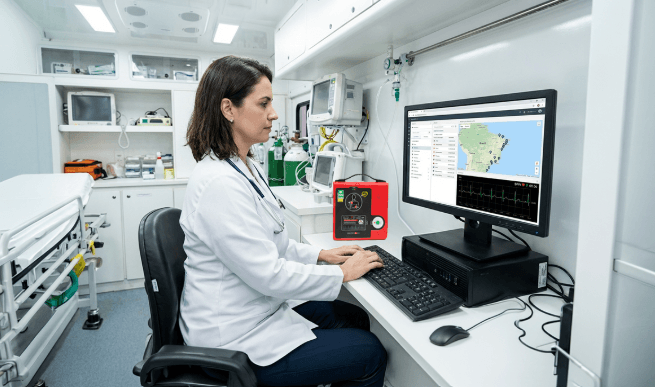
Connectivity expands device follow-up
Another important transformation occurs when medical equipment becomes connected.
The Internet of Medical Things, known as IoMT, enables devices and systems to be integrated in order to share information and monitor equipment remotely.
This concept also expands telemedicine possibilities. In the DualMax, Instramed’s monitor/cardioverter/defibrillator, in.track technology enables monitored parameters to be transmitted to the cloud in real time during patient care via a 4G connection. As a result, a medical center or specialists can follow this information remotely, facilitating collaboration among professionals and supporting faster decisions even from a distance. Access can be provided through a dedicated application or web platform, expanding the possibilities for specialized support during care.
In Instramed’s i.on AED line, in.track technology makes it possible to monitor geolocation and information about equipment status through a mobile connection. In this case, the technology does not replace emergency protocols, but it contributes to managing the cardioprotection infrastructure and monitoring the equipment available.
As different devices begin to generate information, another challenge also emerges: ensuring that this data can communicate with one another. The American Heart Association identifies interoperability as one of the relevant themes for advancing ambulatory cardiovascular monitoring.
Where does artificial intelligence fit in?
The ECG is also becoming an important development source for artificial intelligence applications.
Algorithms are being studied to recognize patterns in the heart’s electrical signals, including characteristics that may be difficult to identify through conventional analysis. These results are promising, but their clinical application requires rigorous validation, responsible integration into care workflows, and professional oversight.
A review published in 2026 in the European Heart Journal Digital Health describes this evolution of the ECG, which is moving from a traditional diagnostic tool to a source of data capable of revealing signals related to both established diseases and changes that may still be subtle.
Recent research also evaluates the use of artificial intelligence to support ECG interpretation in different clinical settings. Challenges remain regarding validation, clinical application, and integration of these tools into care processes, making the supervision of healthcare professionals essential.
The value of technology is likely to become less associated solely with the ability to record data and increasingly associated with the ability to transform it into useful information for decision-making.
Wearables also expand the amount of available information
Smartwatches, patches, and other wearable sensors have brought cardiovascular monitoring even closer to people’s daily lives.
Some of these devices can track heart rate, physical activity, and certain signals related to heart rhythm over extended periods. Medical-use devices can also record ECGs and other physiological information.
This availability of data creates new opportunities, but it also requires caution.
Wellness-oriented equipment and medical devices have different purposes, levels of validation, and indications for use. An alert generated by a wearable may indicate the need for further investigation, but it should not be interpreted in isolation as a diagnosis.
Clinical context and assessment by qualified healthcare professionals remain essential.

The future of cardiovascular care is increasingly connected
The technological transformation of cardiology is taking place at different points along the care journey.
In emergencies, equipment brings together information that supports assessment and response. In ambulatory follow-up, Holter monitoring extends the period of observation of the heart. Software solutions assist in analyzing extensive records. Connectivity enables remote monitoring of devices and infrastructures. Artificial intelligence is beginning to reveal new possibilities for interpreting signals already known to medicine.
These are different technologies, applied in different contexts, but they share one goal: to make relevant information more accurate, accessible, and available at the right time.
For healthcare professionals and institutions, incorporating these technologies requires attention to data quality, team training, integration with clinical protocols, and the selection of solutions appropriate for each need.
Expanding access to information about the heart, bringing society closer to the technologies involved in cardiovascular care, and preparing people and organizations to act safely are also part of this process.
For 40 years, Instramed has developed technologies for different stages of cardiovascular care, from emergency care to monitoring. Because when it comes to the heart, turning information into action is also a way to optimize time.
—
Learn more about Instramed solutions for emergency care, cardiovascular diagnosis, and monitoring.

